


Keynotes
Keynote
Designing Intelligence into the Body: Morphology and Computation in Continuum Robots
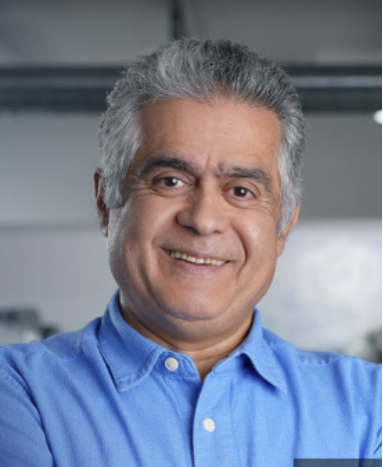
Speaker: Jessica Burgner-Kahrs
Jessica Burgner-Kahrs is Professor at the University of Toronto with appointments in Computer Science, Mechanical & Industrial Engineering, and Mathematical & Computational Sciences. She is the founding Director of the Continuum Robotics Laboratory. She received her Ph.D. in computer science from Karlsruhe Institute of Technology in 2010 and held prior positions at Vanderbilt University and Leibniz University Hannover. Her work has been recognized with the Heinz Maier-Leibnitz Prize and the Lower Saxony Science Award, and she was named a Young Global Leader by the World Economic Forum in 2019.
Keynote
Sensing, Perception, Intelligence & Action in High Intensity, Dynamic Surgical Environments
Over the past decade, the rapid advancements in machine learning have revolutionized various fields, significantly impacting our lives. In this talk, we will delve into the realm of medical applications and explore the challenges and opportunities associated with integrating these cutting-edge technologies into computer-assisted interventions. Our focus will be on surgical data science, holistic OR modeling, developing surgical world models, and fostering acceptance and trust in machine learning and robotic solutions within the medical domain, which often necessitates the path through Intelligence Amplification (IA). Augmented Reality allows us to leverage IA to augment human intelligence and expertise, ultimately paving the way for the seamless integration of Artificial Intelligence (AI) and robotics into clinical solutions.
Drawing from some groundbreaking research conducted at the Chair of Computer-Aided Medical Procedures at both TU Munich and Johns Hopkins Universities, I will present a series of novel techniques developed to address the unique demands of medical applications. Specifically, we will explore their practical implementations in diverse areas, including Robotic Ultrasound Imaging, Multimodal Data Analysis, Semantic Scene Graphs for Holistic Modeling of Surgical Domain, and finally the Surgical World Models. Furthermore, I will showcase compelling examples of how Augmented Reality solutions can serve as catalysts for embracing AI in computer-assisted surgery. In this talk, I will navigate at the intersection of machine learning, computer vision, intelligent user interfaces, and medical robotics to travel along the path from intelligence amplification and tele-manipulation to artificial intelligence and automation in computer assisted interventions.
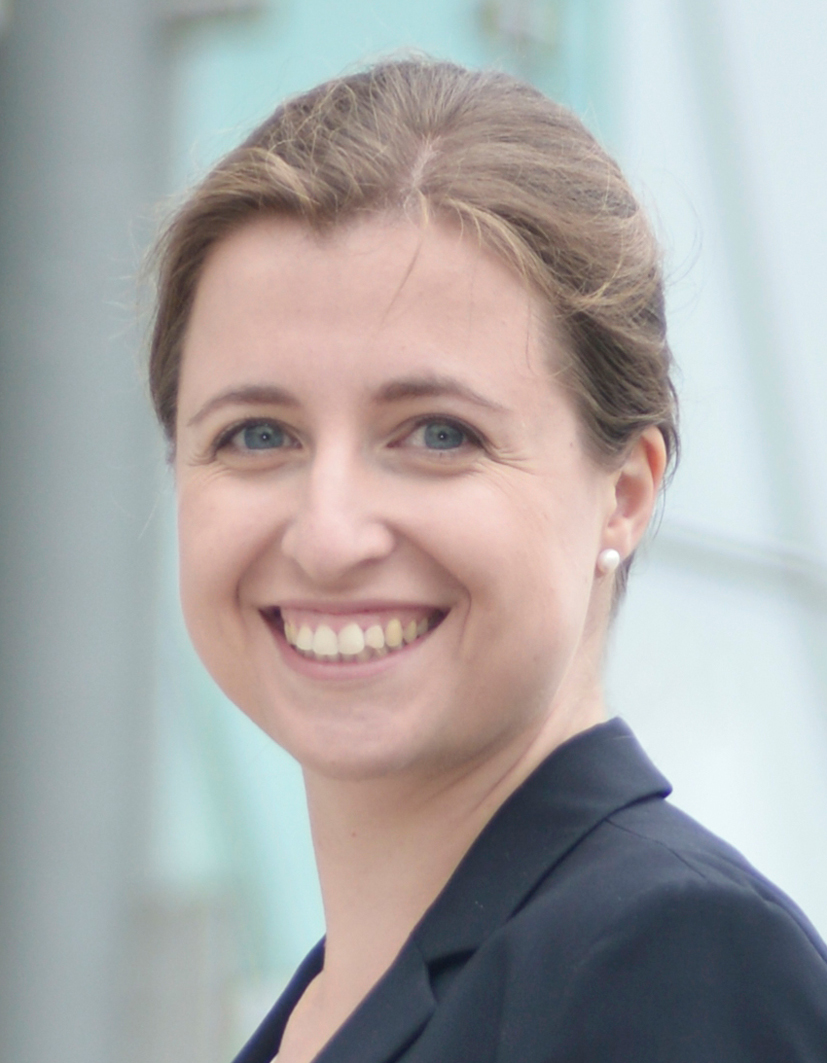
Speaker: Nassir Navab
Nassir, a Full Professor at TU Munich, is a Member of Academia Europaea and Fellow of ELLIS, IEEE, MICCAI, IAMBE, and AAIA. He has received the IEEE EMBS Technical Achievement Award (2025), IEEE ISMAR Career Impact Award (2024), MICCAI Enduring Impact Award (2021), SMIT Technology Innovation Award (2010), and Siemens Inventor of the Year Award (2001). He was named a Medical AR Pioneer in the AWE XR Hall of Fame (2024). Nassir is also known for his pioneering work in digital surgical workflow modeling (since 2005), robotic imaging (since 2012), and Augmented Reality (since 1997). He has authored hundreds of peer-reviewed papers and holds over 100 granted US and international patents. As of March 2026, his papers have received over 104600 citations and enjoy an h-index of 134.