


Keynotes
Keynote Schedule
Nassir Navab
Sensing, Perception, Intelligence & Action in High Intensity, Dynamic Surgical Environments
Kyu-Jin Cho
Bioinspired Embodied Intelligence for Human-centered Robot Designs
Vivian Mushahwar
Interfacing with the Human Body: Implantable and Wearable Technologies for Augmenting Mobility
Lorenzo Masia
Wearable Embodied Intelligence for Human Augmentation and Collaborative Robotics
Jessica Burgner-Kahrs
Designing Intelligence into the Body: Morphology and Computation in Continuum Robots
Keynote 1
Sensing, Perception, Intelligence & Action in High Intensity, Dynamic Surgical Environments
Over the past decade, the rapid advancements in machine learning have revolutionized various fields, significantly impacting our lives. In this talk, we will delve into the realm of medical applications and explore the challenges and opportunities associated with integrating these cutting-edge technologies into computer-assisted interventions. Our focus will be on surgical data science, holistic OR modeling, developing surgical world models, and fostering acceptance and trust in machine learning and robotic solutions within the medical domain, which often necessitates the path through Intelligence Amplification (IA). Augmented Reality allows us to leverage IA to augment human intelligence and expertise, ultimately paving the way for the seamless integration of Artificial Intelligence (AI) and robotics into clinical solutions.
Drawing from some groundbreaking research conducted at the Chair of Computer-Aided Medical Procedures at both TU Munich and Johns Hopkins Universities, I will present a series of novel techniques developed to address the unique demands of medical applications. Specifically, we will explore their practical implementations in diverse areas, including Robotic Ultrasound Imaging, Multimodal Data Analysis, Semantic Scene Graphs for Holistic Modeling of Surgical Domain, and finally the Surgical World Models. Furthermore, I will showcase compelling examples of how Augmented Reality solutions can serve as catalysts for embracing AI in computer-assisted surgery. In this talk, I will navigate at the intersection of machine learning, computer vision, intelligent user interfaces, and medical robotics to travel along the path from intelligence amplification and tele-manipulation to artificial intelligence and automation in computer assisted interventions.
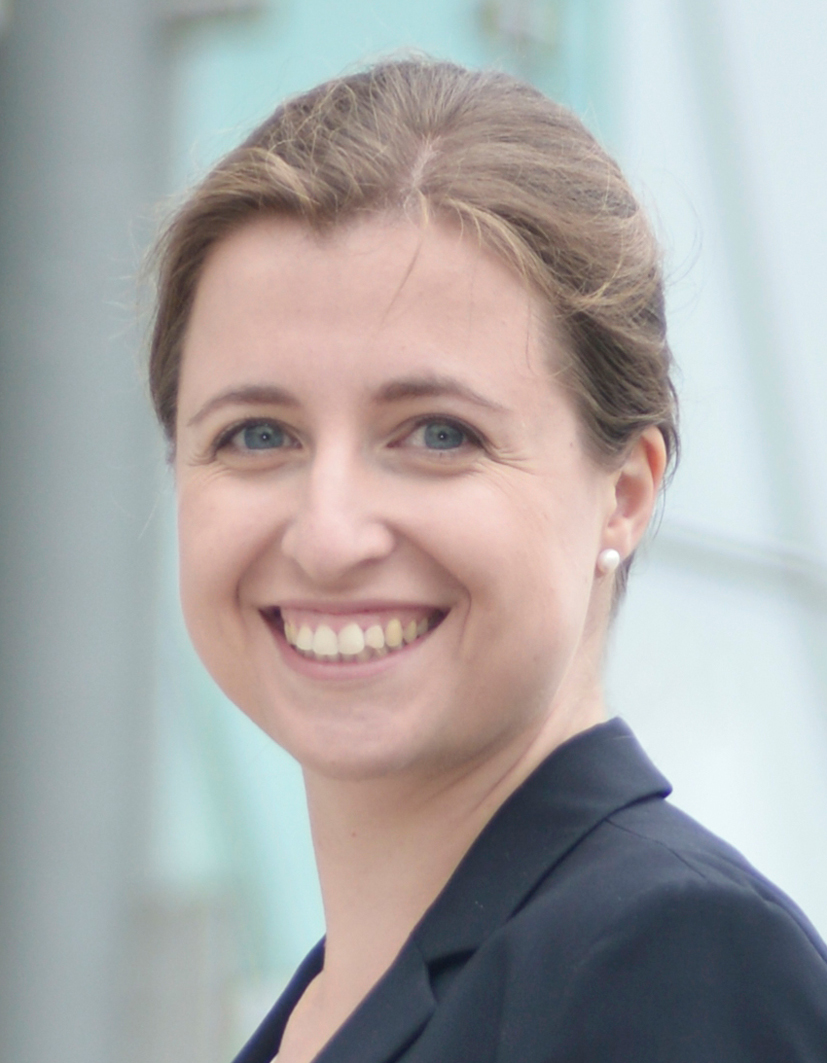
Speaker: Nassir Navab
Nassir, a Full Professor at TU Munich, is a Member of Academia Europaea and Fellow of ELLIS, IEEE, MICCAI, IAMBE, and AAIA. He has received the IEEE EMBS Technical Achievement Award (2025), IEEE ISMAR Career Impact Award (2024), MICCAI Enduring Impact Award (2021), SMIT Technology Innovation Award (2010), and Siemens Inventor of the Year Award (2001). He was named a Medical AR Pioneer in the AWE XR Hall of Fame (2024). Nassir is also known for his pioneering work in digital surgical workflow modeling (since 2005), robotic imaging (since 2012), and Augmented Reality (since 1997). He has authored hundreds of peer-reviewed papers and holds over 100 granted US and international patents. As of March 2026, his papers have received over 104600 citations and enjoy an h-index of 134.
Keynote 2
Bioinspired Embodied Intelligence for Human-centered Robot Designs
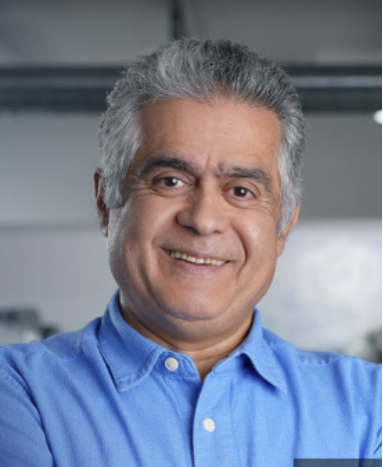
Speaker: Kyu-Jin Cho
Kyu‑Jin Cho is a Professor and the Chair of the Department of Mechanical Engineering at Seoul National University (SNU). He is the director of the SNU Robotics Institute, and BEI Robotics Lab, where his research focuses on soft and bio‑inspired robotic systems. His work includes water‑jumping robots, shape‑morphing mechanisms, and soft wearable robots designed to assist individuals with disabilities. Professor Cho received his B.S. and M.S. degrees from SNU and his Ph.D. in Mechanical Engineering from MIT, followed by postdoctoral research at the Harvard Microrobotics Laboratory.
He has made influential contributions to soft robotics and embodied intelligence, earning the 2014 IEEE RAS Early Academic Career Award. His research has been published in leading journals such as Science and Science Robotics. Professor Cho has held multiple leadership roles within the IEEE Robotics and Automation Society and currently serves as its President‑Elect of RAS. He is also the General Chair of ICRA 2027.
Keynote 3
Interfacing with the Human Body: Implantable and Wearable Technologies for Augmenting Mobility
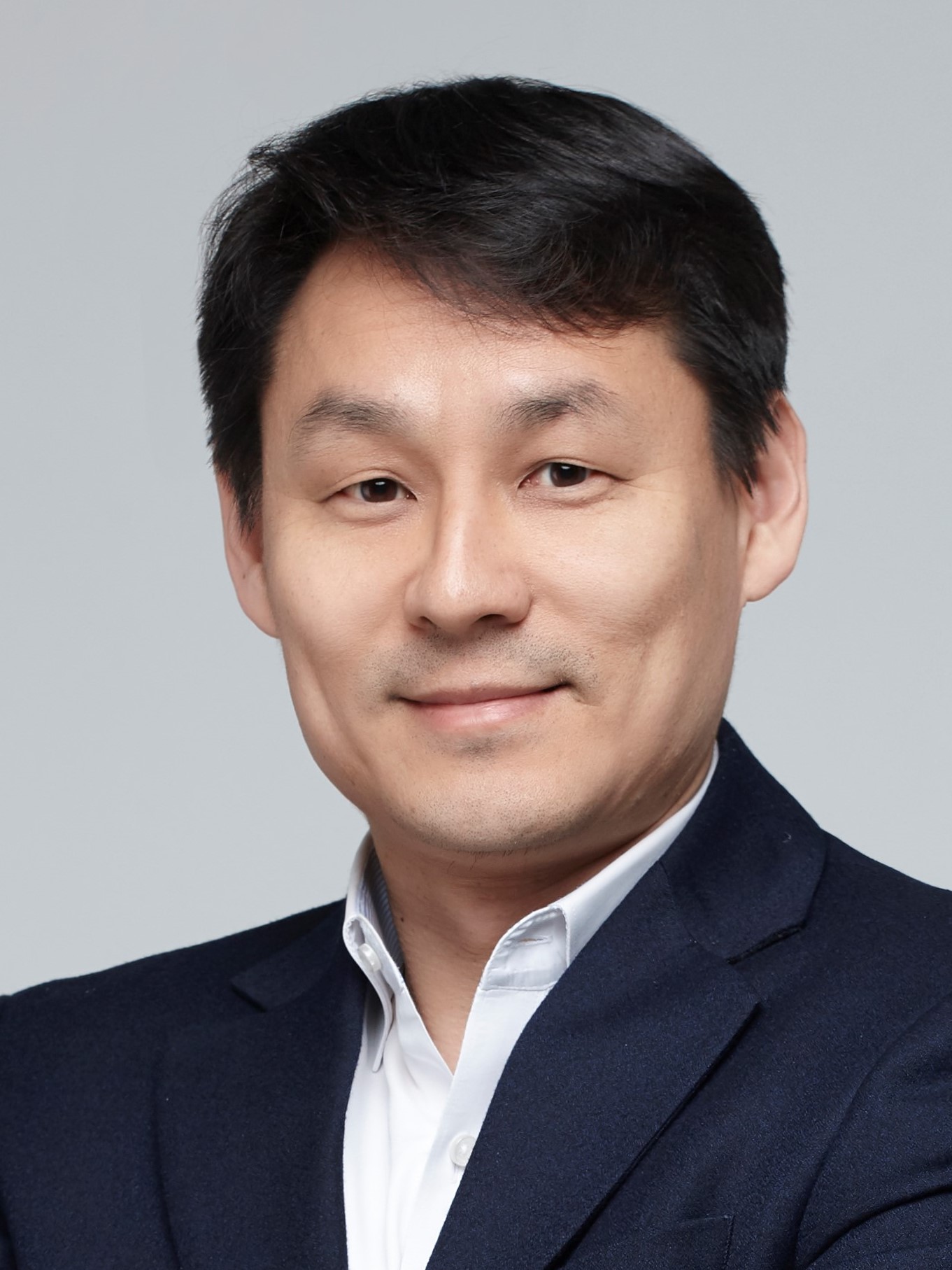
Speaker: Vivian Mushahwar
Dr. Vivian K Mushahwar is a Professor of Medicine and Biomedical Engineering at the University of Alberta and Canada Research Chair (Tier 1) in Functional Restoration. She is also the Director of the Institute for Smart Augmentative and Restorative Technologies and Health Innovations (iSMART) and its business arm, Smart Technology (ST) Innovations. She is a Fellow of the American Institute for Medical and Biological Engineering and a Fellow of the Canadian Academy of Health Sciences. Her work focuses on developing intelligent wearable and implantable neuromodulation devices that restore mobility and prevent secondary complications. She also focuses on developing activity-based therapy rehabilitation interventions that are both efficacious and cost-saving. She initiated the development of micro-implants for stimulating the spinal cord to restore standing and walking after complete spinal cord injury, and demonstrated the benefits of simultaneous arm and leg cycling for improving walking capacity after incomplete spinal cord injury. She and her group invented the wearable garments, Smart-e-Pants and the SOCC, for preventing pressure injuries and deep vein thrombosis, respectively. She now leads the multi-million dollar Smartwear Revolution project, focused on developing transformative assistive technology that can be embedded directly in clothing. Dr. Mushahwar co-founded 4 companies and has been appointed to advisory boards at both academic institutions and industry.
Keynote 4
Wearable Embodied Intelligence for Human Augmentation and Collaborative Robotics
Wearable robots are evolving from assistive devices into intelligent embodied systems capable of augmenting human capabilities and mediating physical collaboration between people and machines. In this context, soft wearable robots, or exosuits, represent a major departure from traditional rigid exoskeletons: they are lightweight, compliant, and intrinsically closer to the biomechanics of the human body. Yet their potential can only be fully exploited when their physical embodiment is coupled with intelligence — the ability to sense, interpret, and adapt to the user and to the surrounding environment.
This talk will present recent advances from my team over the past five years in the development of compact, robust, reliable, and efficient exosuits for human assistance, rehabilitation, and augmentation. Particular emphasis will be placed on how physiological signals, biomechanics, and movement patterns can be extracted from the wearer and transformed into control strategies that personalize the interaction between human and machine. This wearable intelligence enables different forms of augmentation: supporting the recovery of motor function after neurological damage, enhancing walking performance in older adults, and enabling a human operator wearing an exosuit to physically coordinate with a collaborative robot.
A central concept of the talk is Context-Aware Control, an approach that combines model-based control, human-in-the-loop sensing, artificial intelligence, and artificial vision to adapt robotic assistance to changing tasks, users, and environments. By integrating information from the body, the robot, and the external context, exosuits become more than actuated garments: they become embodied interfaces between human intention, physical assistance, and collaborative robotic systems.
The broader vision is that wearable embodied intelligence will play a central role in the future of human augmentation and collaborative robotics, creating systems that do not simply assist movement, but understand human state, adapt to human needs, and extend human capability in rehabilitation, daily life, and industrial environments.
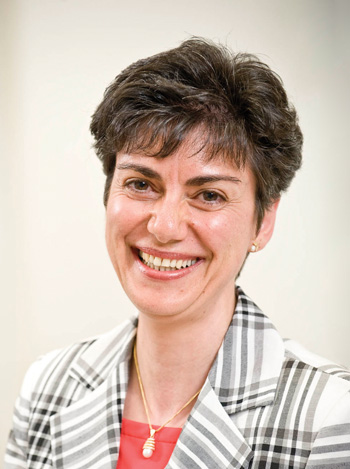
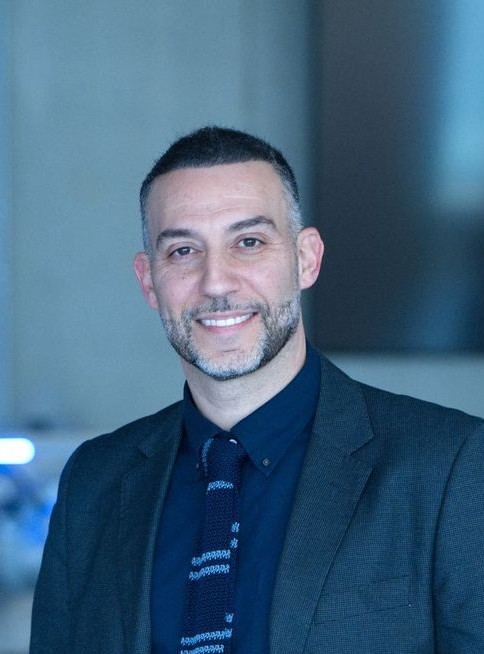
Speaker: Lorenzo Masia
Lorenzo Masia is the Executive Director of the Munich Institute of Robotics and Machine Intelligence (MIRMI). His research focuses on robotics, particularly exosuits and robot-assisted rehabilitation. He is specialized in design of mechatronic devices for rehabilitation and develops control strategies for human-robot interaction. His work also involves mechanism with controllable compliance, addressing challenges in healthcare and human augmentation.
Prof. Masia studied Mechanical Engineering at Sapienza University of Rome and received his PhD from the University of Padua in 2007. After research stays at MIT and the Italian Institute of Technology, he became Assistant Professor at Nanyang Technological University in Singapore (2013) and later joined the University of Twente (2018). From 2019 to 2024, he was Professor at Heidelberg University. Since 2024, he is Professor of "Intelligent BioRobotic Systems" and Executive Director of MIRMI at TUM.
Keynote 5
Designing Intelligence into the Body: Morphology and Computation in Continuum Robots
Continuum robots have achieved remarkable success in applications such as minimally invasive surgery, where compliant bodies and human-in-the-loop teleoperation enable dexterous manipulation in confined environments. While this application-driven paradigm has demonstrated the unique strengths of continuum robots, it has also shaped the research questions the field has prioritized. As continuum robots are increasingly expected to operate with greater autonomy and interact more intelligently with their environments, advances in embodiment, modeling, state estimation, and control become essential.
In this keynote, I argue that intelligence in continuum robots should not be viewed solely as an algorithmic capability, but as an emergent property of the interplay between morphology, mechanics, and computation. I will present recent work on modular continuum robot embodiments with tailored stiffness profiles, demonstrating how mechanical design can encode functionality directly into the robot’s body. I will then discuss efficient physics-based simulation, showing how the accuracy of Goldstandard dynamic models can be closely approximated within the OpenCR-MuJoCo framework. Finally, I will examine how these advances provide the foundation for state estimation and localization for increasingly autonomous continuum robots.
By connecting robot embodiment, computational models, and estimation, this keynote highlights a shift from application-driven development toward establishing the fundamental principles that will enable the next generation of intelligent continuum robots.
Speaker: Jessica Burgner-Kahrs
Jessica Burgner-Kahrs is Professor at the University of Toronto with appointments in Computer Science, Mechanical & Industrial Engineering, and Mathematical & Computational Sciences. She is the founding Director of the Continuum Robotics Laboratory. She received her Ph.D. in computer science from Karlsruhe Institute of Technology in 2010 and held prior positions at Vanderbilt University and Leibniz University Hannover. Her work has been recognized with the Heinz Maier-Leibnitz Prize and the Lower Saxony Science Award, and she was named a Young Global Leader by the World Economic Forum in 2019.